Never treat a seller's claim as authentication. Inspect the particular item, check its condition and relevant identifying details, and weigh what will happen if the purchase or classification is wrong. Augs are a separate identity threat: visual resemblance alone is not a safe checklist.
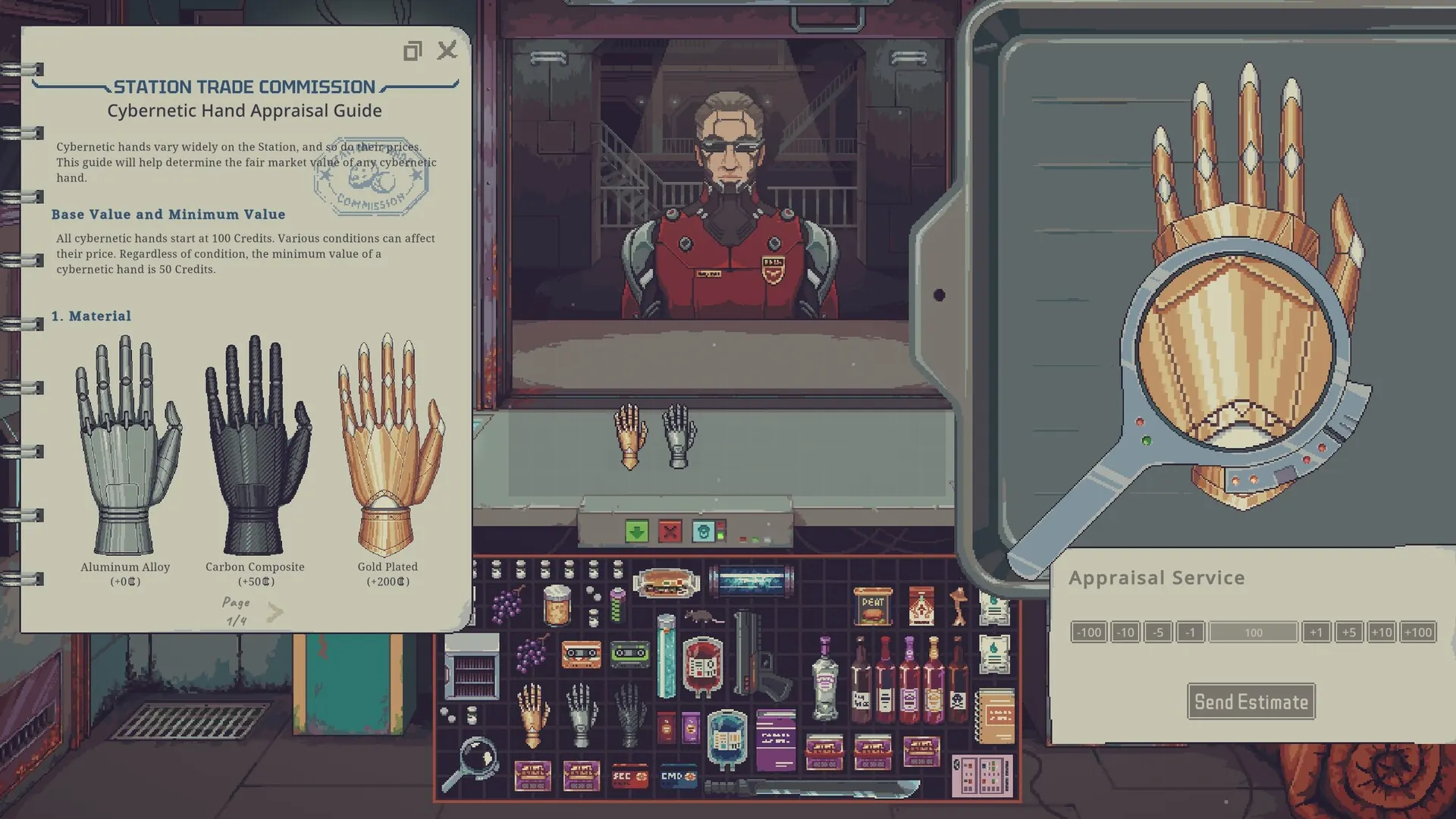
How to inspect an offer
The game officially includes rare-good authentication and counterfeit trading. An extended Water Machine Broke run around 09:35 demonstrates a player reviewing medical goods: visible expiry, manufacturer, item colour and serial details inform their decision. This does not establish universal valid serial ranges; those depend on the particular document or item inspected.
Use this sequence at the counter:
- Open the relevant detail or inspection interface.
- Read the label and condition of the exact item being offered.
- Compare the claims against any in-game reference available for that item.
- Check expiry or durability where the item exposes it.
- Only then negotiate; the loss from a counterfeit should be part of your decision.
What about Augs?
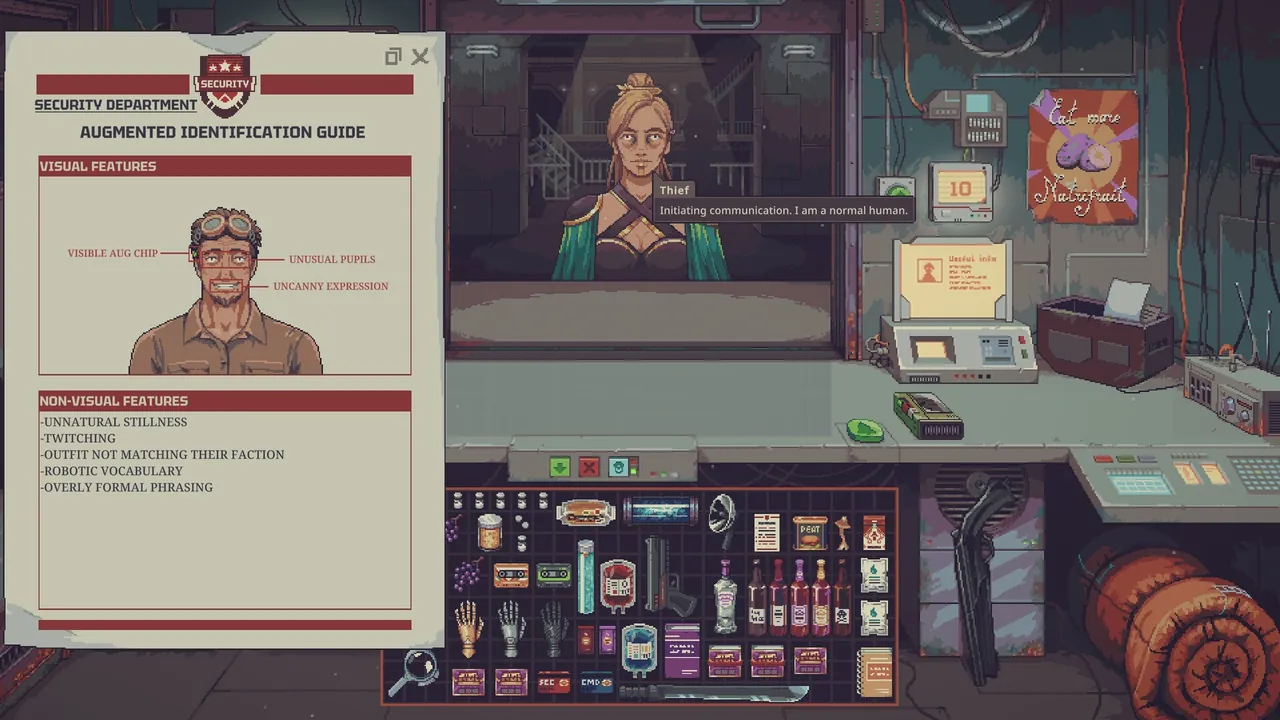
The official full-game description says a rogue AI can take over hosts and that Augs can resemble ordinary customers. The game makes identification and response consequential. Video dialogue and automatic subtitles alone do not establish a safe, complete symptom-by-symptom detection checklist for this demo, so do not act on a made-up definitive visual rule.
Mistakes to avoid
Don’t treat every suspicious customer as an Aug. Don’t assume counterfeit goods are automatically profitable. Don’t use a single creator’s successful serial number as a universal rule. Read the relevant current version of the game’s item reference, then revisit the decision. For broader risks, see factions and black market.
Current-demo fixes change how you should inspect goods
The September 14 update fixes a selling exploit in which the Tourist Tax modifier could remain on an item after it was transferred to a different customer. It also corrects double application of buyer modifiers to boxed goods, and fixes an issue where a customer could confront you about a quality label on an empty water container. Do not use earlier-playtest demonstrations of those behaviours as price or authenticity rules.
A practical check before buying an unfamiliar object is to establish the item’s exact type, condition and relevant details, then compare the current offered price with its actual potential buyer. Separately, check whether the item can be resold legally or requires a permit. Those are different questions: an authentic item can still be risky inventory, and something cheaply offered can still be a bad buy if your intended customer never appears.
About Augs
The current patch says that an Aug no longer causes a reputation loss when offered an incorrectly labeled item, but that does not establish an identification rule. It is tempting to generalize from one screenshot or one creator’s guess; avoid treating any single dialogue phrase, clothing item or character portrait as a guaranteed test. The developer’s demo listing presents Aug encounters as a high-stakes classification decision. Without a documented universal checklist, treat uncertainty as uncertainty rather than publish false certainty.
Last checked September 16, 2026. Instructions refer to the September demo unless otherwise stated.