
Set aside rent before buying upgrades. Then use demand news, each customer's buying power, and the actual condition of stock to decide what to trade. A profitable-looking item is a bad purchase if it traps the cash you need for the next payment.
Start with a rent reserve
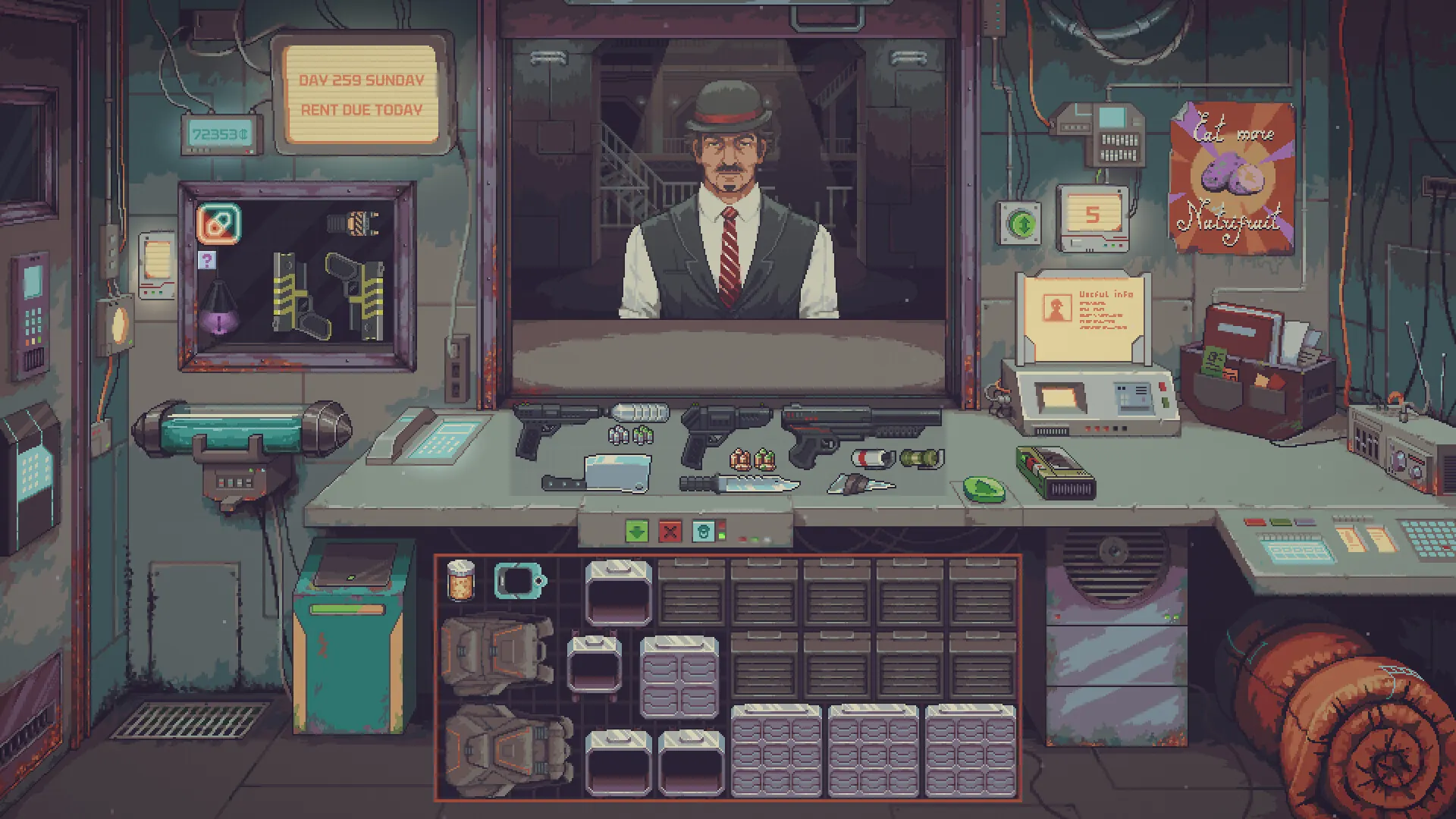
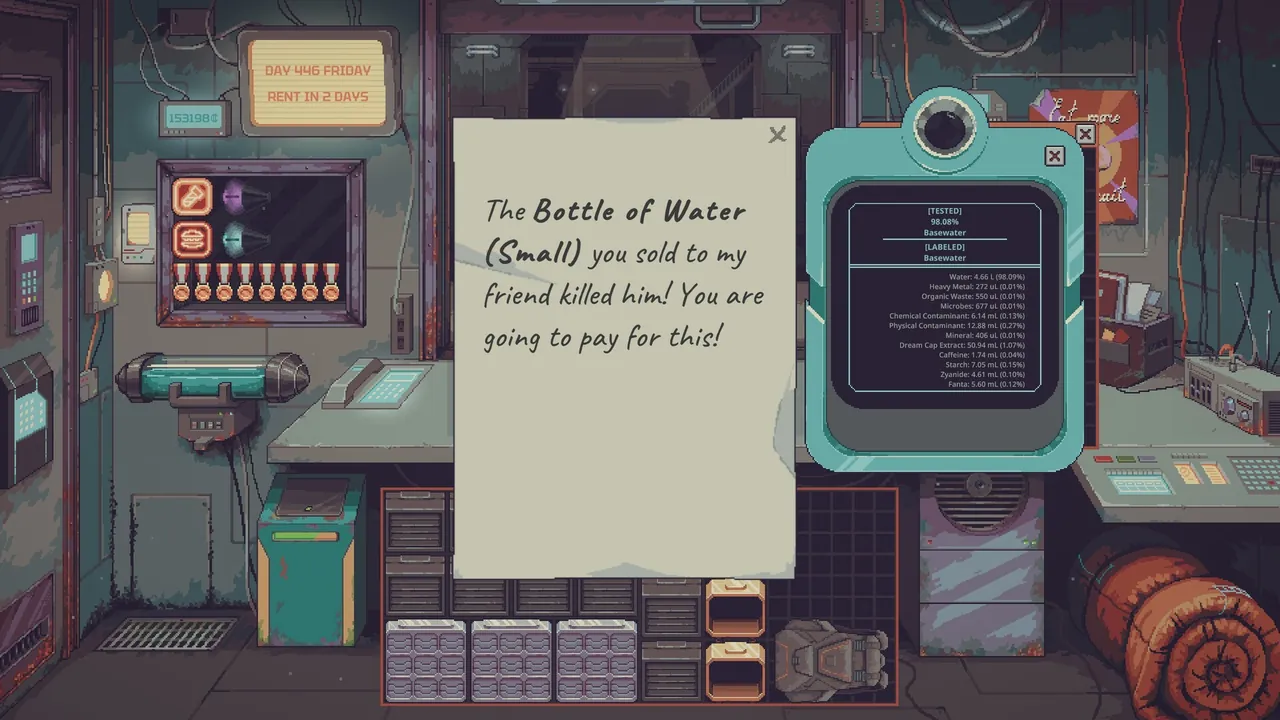
Rent is a central pressure in Probably Stolen; the Steam game description frames buying out the shop as a long-term goal. The current demo introduces periodic rent and the risk of spending past your means. A hard-mode video shows the player selling possessions and urgently building enough cash to meet a payment — a useful warning, not a recommended strategy.
Working formula: safe spending money = cash on hand − next rent payment − indispensable supplies. This is your own planning rule, not a hidden game mechanic. Use visible in-game amounts; do not assume another creator’s exact payment applies to you.
Read the station news before stocking up
The market includes demand events and incoming shortages. A recorded Water Merchant stream shows a player reacting to a forecast food shortage by keeping food for a later rise, and another run discusses increased weapon demand. That demonstrates the value of reading notices, but the event and its timing vary by run. Don’t reproduce a one-off sale price as a universal price list.
| If the notice says… | Consider… | Avoid… |
|---|---|---|
| Demand is set to increase | Keeping stock you can afford to hold | Spending rent money on speculative stock |
| Demand is currently high | Offering suitable inventory now | Assuming every customer has enough credits |
| A raw-material shortage is ahead | Checking production requirements | Buying inputs your machines cannot use |
| No useful event is active | Liquidating slow stock and saving | Upgrading just because credits are available |
Use the customer, not a theoretical maximum price
At 28:20 in a Water Merchant run, a player weighs whether to miss a small amount on a sale or take the money now. This is an example of the actual trade-off: the buyer’s remaining credits, how many other buyers are left, and whether you need cash today all matter. The right answer is contextual.
Keep three inventory groups: items you can sell immediately, items reserved for production or upcoming demand, and expensive/suspicious items needing inspection. Labeling these conceptually is more useful than a universal item tier list that ignores game state.
A five-minute closing routine
- Look at cash and the number of days until rent.
- Put an amount equal to the next obligation outside your optional spending budget.
- Clear vulnerable counter stock and organize sale versus crafting inventory.
- Check broken tools and the cost of tomorrow’s essential materials.
- Decide whether tomorrow is a market day, scavenging day or production day.
The interactive survival checklist turns these into repeatable steps. If your stock is mostly water, use the water guide; if gear keeps draining cash, read machines and upgrades.
Watch the goods category, not only the label
The September 14 patch clarified that a water container counts as a water good when it has liquid in it, but as a household item when empty. Station market events now correctly reprice the container as well as the liquid. Premium Spring Water has the water tag, yet non-Upper-Level customers and tourists will not accept it. Don’t plan a rent payment based on a presumed universal market for one bottle: the buyer segment and condition of the item both matter.
A simple way to evaluate an expensive deal is to write down cash now → protected rent → unavoidable operating spend → spendable balance. Only consider an optional machine after the balance is positive. Compare the expected sale to its actual purchase cost, packaging, repairs and any risk of unsold stock. This is a worksheet using your observed in-game amounts, not a claim that every run has the same margins.
Last checked September 16, 2026. Instructions refer to the September demo unless otherwise stated.